Case study
AIGetmany: how we built and run our own SaaS on AWS serverless
- monthly recurring revenue, from zero
- Headline result$40K
// the product
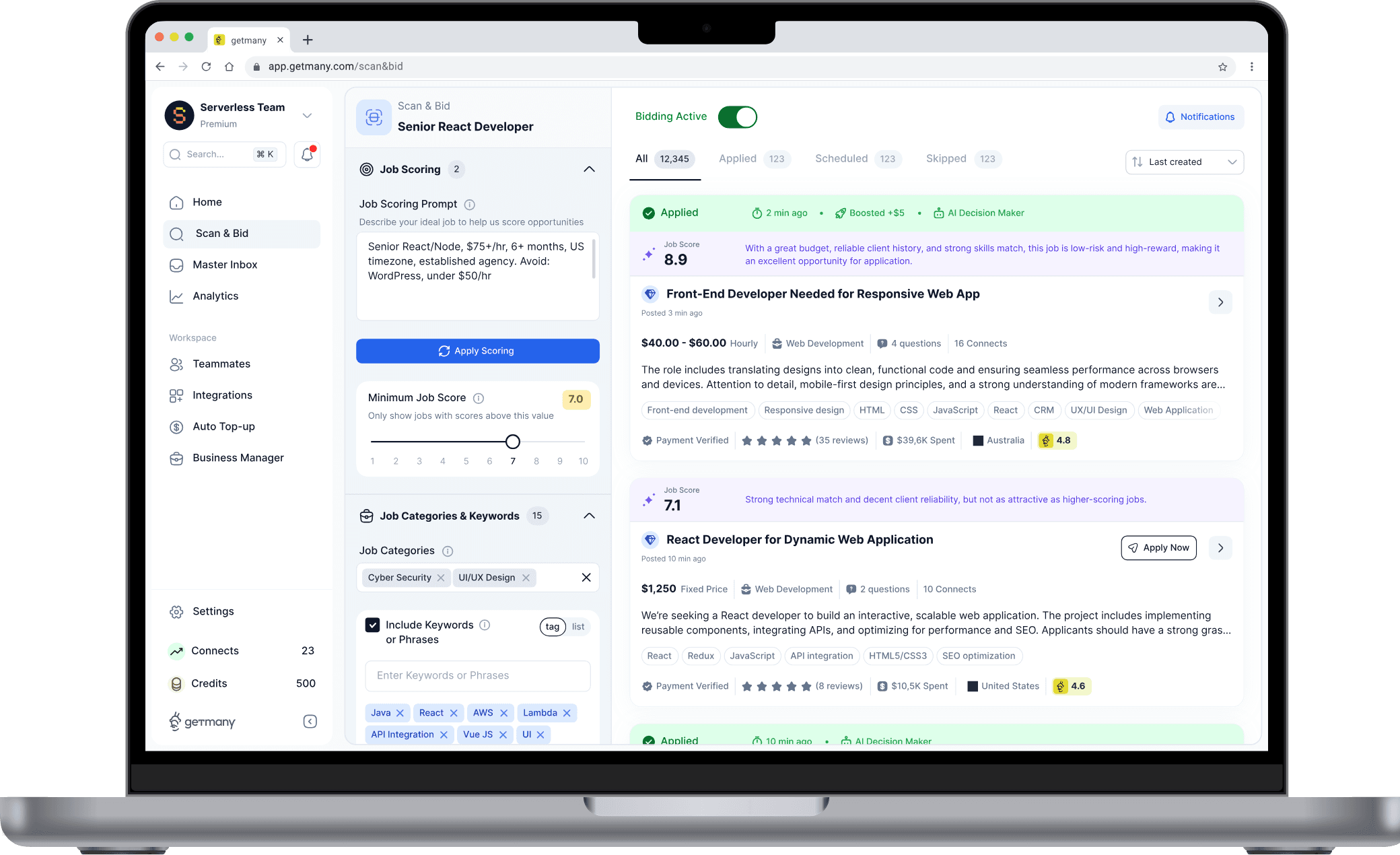
Getmany is our own product. It is a system for Upwork agencies and freelancers: it finds jobs, decides which ones to bid on, writes the proposal, sends it and then tracks the client's reply.
The agency sets the job criteria and the tone of the proposals. Getmany does the rest. Serverless Team built Getmany and runs it in production.
The first commit is dated 4 September 2023. The repository now holds about 9,700 commits. Monthly recurring revenue grew from zero to $40K.
// how it works
From a new Upwork job to a sent proposal
Each job passes seven steps. Each step is a small serverless function on AWS Lambda.
- 01
Ingest
A scheduler pulls new jobs from the Upwork API every few minutes. Each job is stored once under its job ID, so a job seen twice is never bid twice.
- 02
Index
A worker checks for duplicates, scores the job with a rule set and writes it to OpenSearch.
- 03
Match
Each customer scanner is stored as a saved query. A new job is checked against all scanners in one OpenSearch call.
- 04
Decide
An ordered chain of rules decides if the bid goes out: daily and monthly limits, time windows, job freshness, collisions between scanners and an AI yes or no.
- 05
Schedule
The bid gets a send time inside the customer's daily limits.
- 06
Send
A worker runs the last checks, writes the cover letter and the answers to the client's questions, and submits the proposal.
- 07
Track
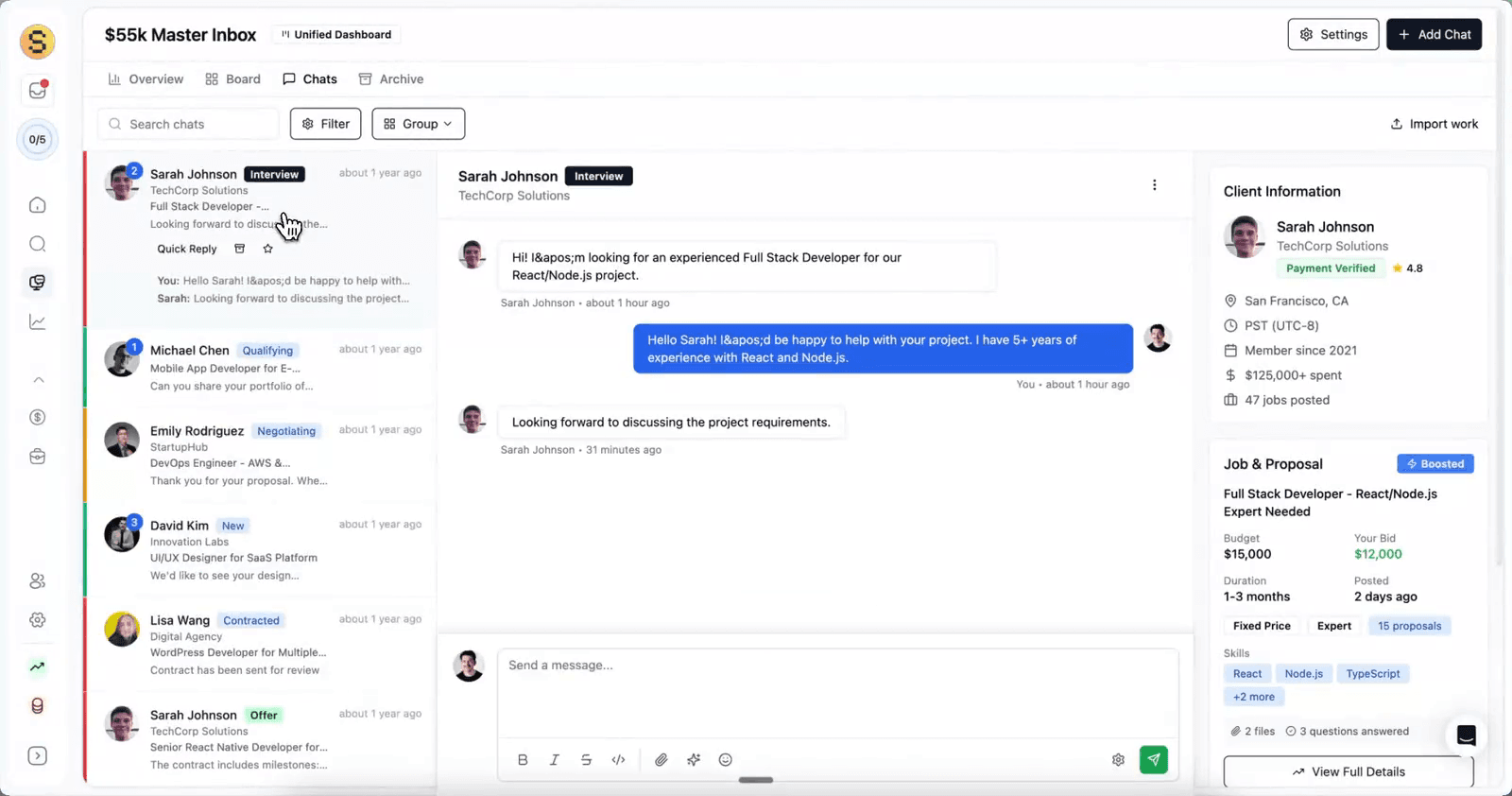
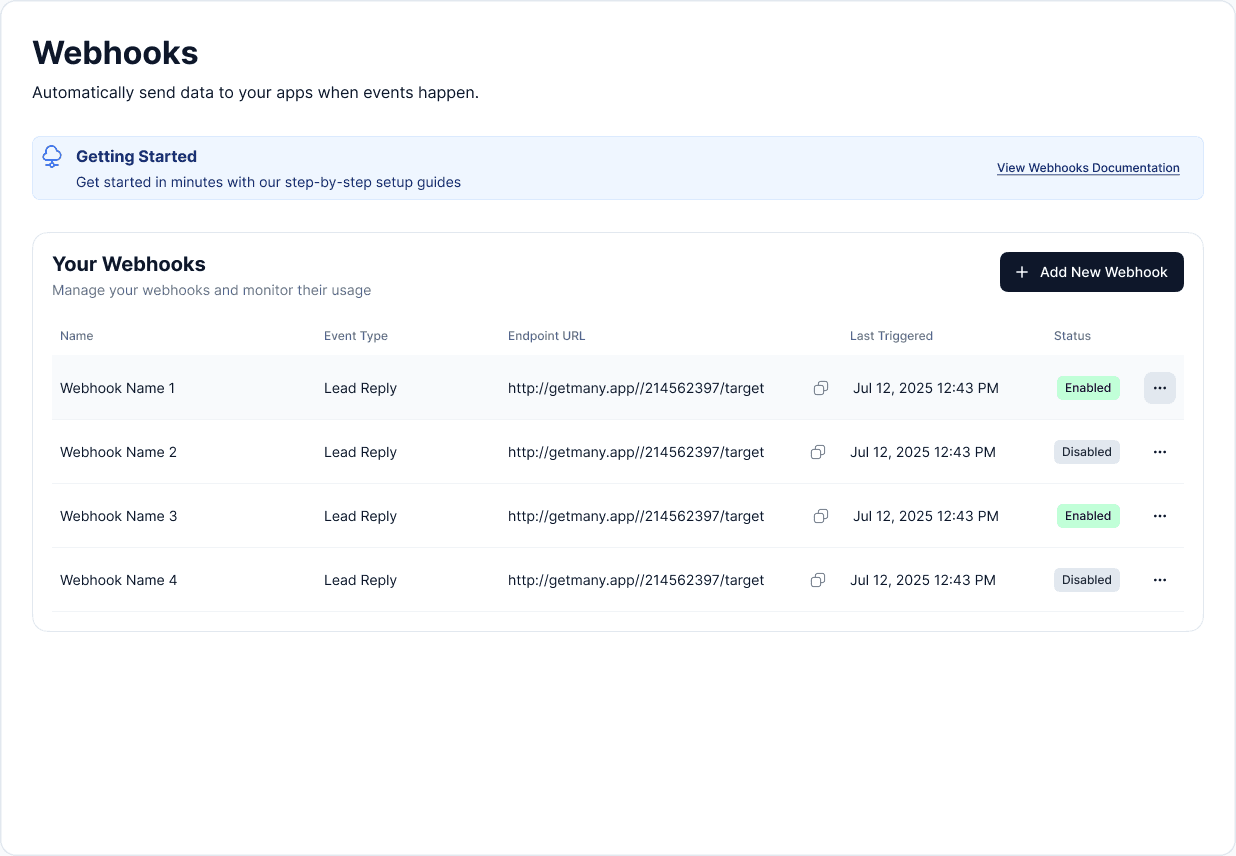
Views, replies and hires come back as events on the proposal. Replies land in one inbox, and the CRM, Slack, Discord, Telegram and Google Sheets get the update.
// the stack
What it runs on


Code
One TypeScript monorepo with pnpm and Turborepo. Next.js with tRPC for the web app, Hono for the public API, Vite for the admin app.
AWS
The backend runs as serverless functions on AWS Lambda.
Data
MongoDB holds accounts, scanners and proposals. OpenSearch holds the jobs and the scanner queries.
LLM layer
Every model call goes through one gateway, with Claude by default.
Product services
Clerk for sign-in, Stripe for billing and PostHog for product analytics. Slack, Discord, Telegram, Google Sheets, HubSpot and Pipedrive as integrations.
Delivery and logs
GitHub Actions check every pull request with a build, a lint run and a type check, and they run the deploys. Each production deploy leaves a mark on the log timeline.
// engineering decisions
Engineering decisions
Saved searches that wait for jobs
A common design runs every saved search on a timer. We store each scanner as a query and check each new job against all of them in one OpenSearch call, a percolate query. One call per job replaces one search per scanner.
A bid is a rule chain, then a schedule
A bid passes an ordered list of rules: limits, freshness, collisions between scanners and an AI decision. Only then does it get a send time. Each rule is one file, so a new rule does not touch the others.
No duplicate events from parallel sources
A client's view or reply can arrive from more than one source at the same time. Each result type is written with one conditional database update, so a second writer changes nothing.
Safe to process a message twice
The same job or event can arrive more than once. Jobs are keyed by ID, so a job is never bid twice, and each step validates its input before it acts.
One gateway for every model call
The code never calls a model provider directly. The gateway hides the differences between providers.
// where the models work
Where a model does the work
Models work at these points: the decision to bid, the cover letter, the answers to a client's screening questions, the wording of inbox replies, the audit of an agency or freelancer profile, and a small classification step when a job is indexed.
Getmany runs on Claude by default. The gateway also serves other model families, and the customer can pick the model that writes the cover letter.
// timeline
Milestones in the repository
September 2023
First commit. The serverless backend and the shared data package follow in the same week.
April to June 2024
Plan limits, a new web app and the model layer.
February and March 2025
The public API, the admin app and the second version of the Upwork client.
December 2025
A managed setup for Master Inbox, the one place for every client reply.
// result
Result
Getmany grew from the first commit to $40K in monthly recurring revenue, and it runs on the same patterns we use in client work.
Tell us which workflow Claude should run
Send a few lines about the process and the systems involved. Kyrylo replies with the next steps, or you can book a call.

Kyrylo Kozak
Founder and CEO